Children and Money: Why the First Lesson Should Be About Choices
October 13, 2026
Introduction
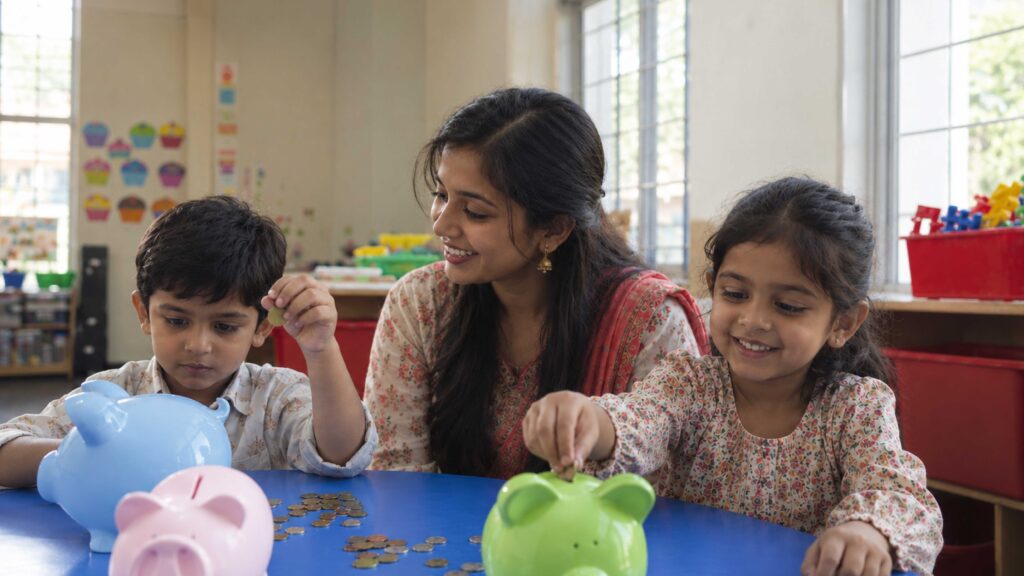
When children first begin learning about money, the conversation often starts with saving. A piggy bank, a small allowance, or a reminder not to spend everything at once.
Saving is important, but financial literacy begins with something even more fundamental: understanding choices.
Every time we spend, save, wait, borrow, or give, we are making a decision. Helping children understand these decisions early can shape the way they think about money long before they begin earning it themselves.
If a child receives ₹100, instead of immediately saying, “Save it,” try asking:
“What could you do with it?”
They may choose to spend some, save some, keep it for later, or use it towards something they really want. The purpose is not to find one correct answer. The purpose is to encourage thinking.
That simple question introduces an important idea: money is limited, so every choice has a consequence.
Needs and wants
One of the easiest financial concepts children can understand is the difference between a need and a want.
Food, school supplies, or basic clothing may be needs. A new toy, game, or gadget may be a want.
But instead of simply telling children what belongs in each category, encourage them to think about it.
Ask:
“Do you need this, or do you want it?”
“Will you still want it tomorrow?”
“Would you rather buy this now or save for something bigger?”
These small conversations gradually build judgement.
Learning to wait
Saving also teaches children that not every reward has to be immediate.
If a child wants something that costs more than they currently have, saving towards it can teach patience, planning, and delayed gratification.
The lesson is not simply about collecting money. It is about understanding that some goals take time.
A simple savings goal can make this visible.
If something costs ₹500 and the child has ₹150, they can see how each small saving decision moves them closer to what they want.
Spending is also part of learning
Children should also understand that spending money is not necessarily a bad thing.
The real question is whether the spending was thoughtful.
After a purchase, parents can ask:
“Was it worth it?”
“Would you make the same choice again?”
“Would you rather have saved that money?”
Even a small regret can become a useful lesson.
Borrowing and responsibility
Borrowing introduces another important idea: responsibility.
When children borrow a book, toy, or other item, they already understand that it belongs to someone else and must be returned.
Money works in a similar way.
As children grow older, this basic understanding can help them make sense of borrowing, loans, credit, and debt.
Everyday moments can teach a lot
Financial literacy does not always need a formal lesson.
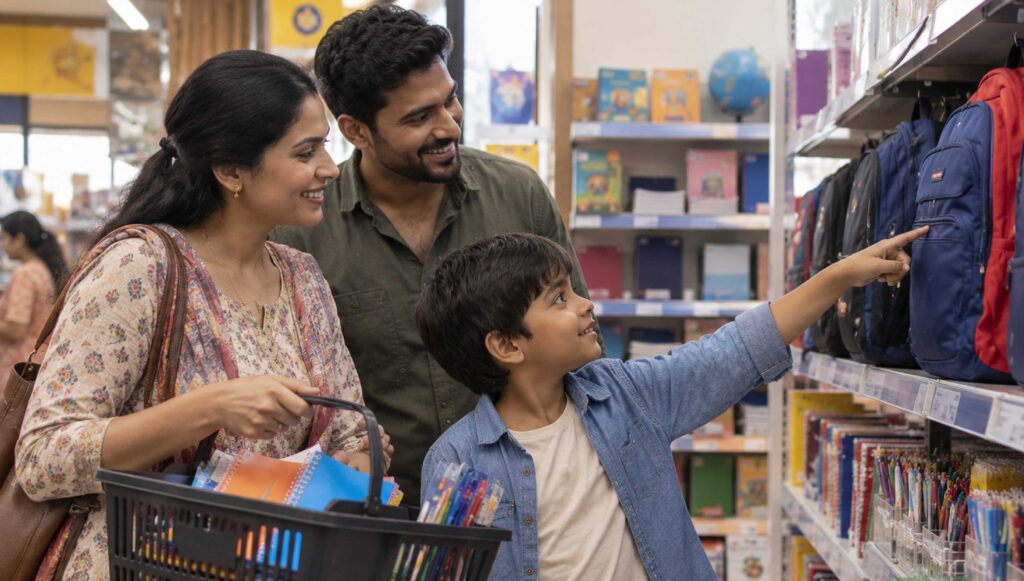
A supermarket visit, a family purchase, or a simple allowance can create meaningful conversations about price, value, priorities, and choice.
The goal is not to make children afraid of spending.
It is to help them pause, think, and decide.
Because financial literacy is not only about how much money someone has.
It is about how thoughtfully they choose to use it.